
Why androids don’t dream of electric sheep
Why A.I. can mimic intelligence but can never become conscious
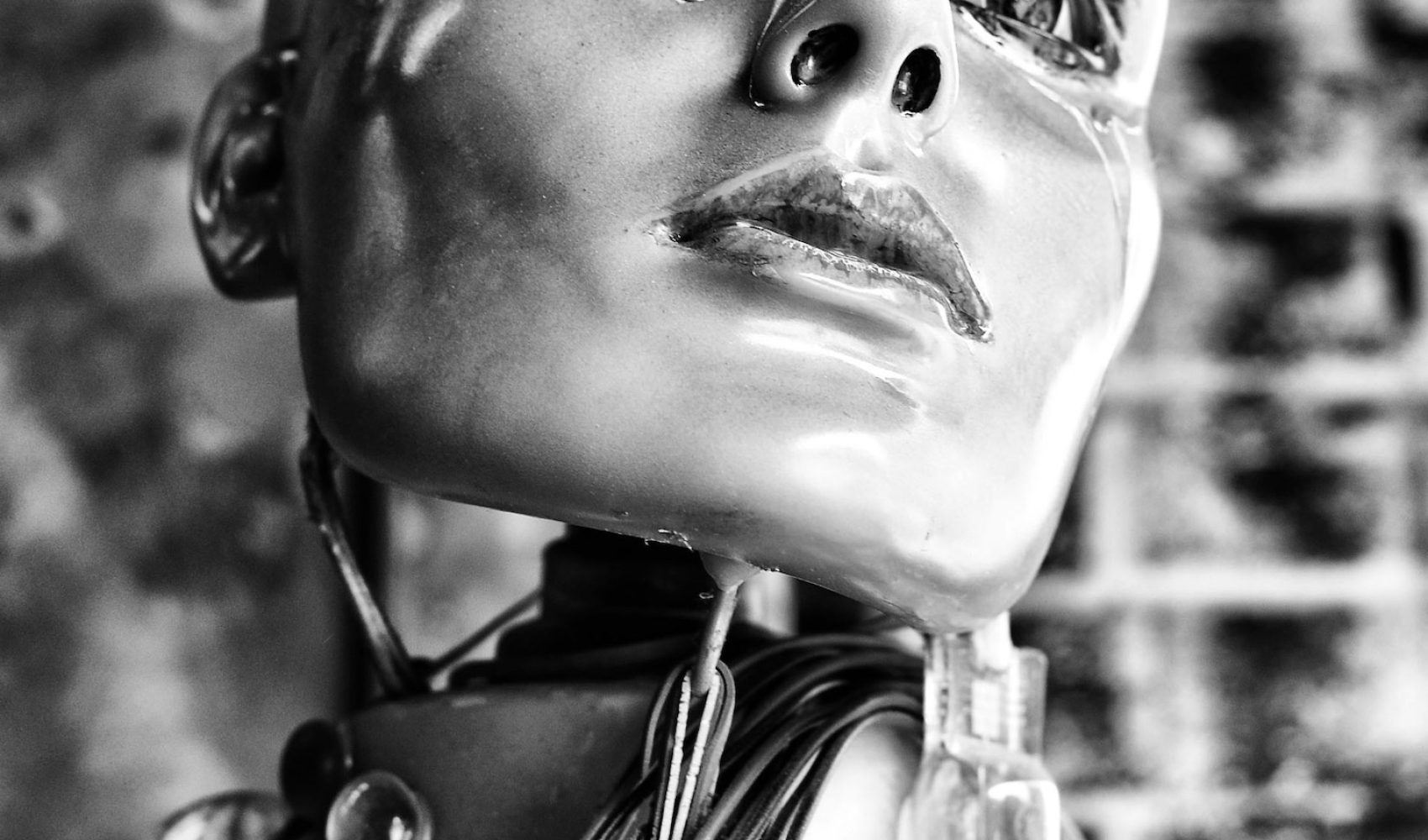
“In the future, the only way to tell androids from humans is through a delicate battery of tests, ones which examine the moral conscience of the subject. Those tested in tune with nature, and sensitive to it, will pass as human; those who aren’t, won’t.”
— John Nubbin, reviewing Do Androids Dream of Electric Sheep? —
We are entering a moment in human history shaped by the rapid acceleration of artificial intelligence. Systems now write, compose, diagnose, predict, and converse with a fluency that would have seemed implausible only a decade ago. As these technologies become increasingly embedded in daily life, they force us to confront questions that are no longer merely philosophical but urgently practical. What, exactly, distinguishes machine intelligence from conscious awareness? How does consciousness arise? And is it something that could ever exist independently of living systems?
These questions matter because they strike at the heart of what it means to be a mind rather than a mechanism. If intelligence can be replicated through computation, then perhaps consciousness itself is nothing more than a sufficiently complex algorithm. But if consciousness is something deeper, something not captured by syntax, structure, or rule-following, then no amount of processing power will ever be enough to produce it.
The Unaware Android
At first glance, computation seems like a natural framework for understanding consciousness. The brain processes information, updates its models of the world, makes predictions, and generates behaviour. These are precisely the functions that modern computers and artificial systems now perform with astonishing sophistication. Neural networks learn. Large language models reason. Autonomous systems adapt. The parallels are obvious.
This resemblance has given rise to a dominant view in cognitive science and philosophy of mind that mental states are computational states, and that the mind is, in essence, a kind of biological computer. In this reductionist view, consciousness is simply be an emergent property of sufficient complexity, where thinking equals information processing, perception equals data input, and what we call decision-making equals algorithmic optimisation. And if we just build the right architecture, and scale it high enough, then awareness should eventually appear!
But this assumption rests on a conceptual error.
The fact that a system behaves as if it understands does not mean that it does. The fact that it manipulates symbols does not mean that those symbols are meaningful to it. The fact that it produces human-like outputs does not mean it inhabits a world. The fact that it seems conscious, does not mean that it is.
Syntax is not Semantics
At its core, a computer is a physical system shuffling matter according to pre-defined rules. Electrons flow across circuits, voltages rise and fall, algorithms execute, but none of this carries inherent meaning. A computer merely manipulates symbols, it does not understand them. And syntax is not semantics. Symbols acquire significance only because we assign it to them, decide what counts as information, and interpret the outputs. Without a conscious observer mapping states to meaning, a computer is simply another physical system evolving according to the laws of physics.
This problem has been explored in depth by philosophers such as Hilary Putnam, John Searle, David Chalmers, and others. One of the most striking formulations of it is known as the triviality argument. If any physical process can be interpreted as a computation, then in principle everything computes. Everything from a rock to a nervous system could all be described as performing computations if we are willing to impose the right interpretive framework. But if everything computes, then the concept loses its explanatory value. It no longer distinguishes anything. Calling a system a computation does not reveal a property intrinsic to the system itself, but rather tells us more about how we choose to describe it.
Consciousness is different in a fundamental way. It does not require an external interpreter to give it meaning. Awareness is the very condition under which meaning appears. Where computation depends on a conscious observer to assign significance, consciousness is the observer. It is a self-present, first-person reality, not something layered on top of a process, merely processing information. It experiences. This is why human insight, intuition, moral judgement, and aesthetic response cannot be reduced to symbol manipulation. These are not the outputs of an algorithm. They arise from an integrated field of experience in which perception, memory, emotion, and reflection are unified. Consciousness does not simply register the world. It participates in it. It relates. It cares. It responds.
Machines, no matter how sophisticated, simply do not do this, nor are they able to do this. They reorder matter, follow rules, and generate outputs that resemble intelligent behaviour, but that resemblance is not the same as having an identity. They do not inhabit meaning. They do not experience.
Where their operations remain syntactic, not semantic, consciousness, is intrinsic, participatory, and irreducible. A distinction that really matters because, if we fail to grasp it we risk mistaking imitation for identity, and performance for presence. However, once we do understand why computation cannot generate meaning from within, we are in a position to examine the limits of artificial systems more clearly and to see why, however convincing they may become, androids will never dream of electronic sheep.
The Limits of Synthetic Systems
If computation derives its meaning from us, then artificial systems, no matter how advanced, remain bound to the limits of their design. They can process vast amounts of information, detect patterns too subtle for human perception, and respond with remarkable speed and accuracy. But none of this amounts to genuine participation in reality, and what they display is not awareness, but performance.
What AI lacks are four salient characteristics of being conscious:
- Subjective experience — there is “something it is like to be” you.
- Awareness of that experience — not just processing information, but experiencing it.
- Continuity of self over time — a felt sense of “I am the one having this.”
- Emotional salience — things matter to you.
What makes consciousness fundamentally different from complex processing is the presence of phenomenology — lived experience. The redness of red. The ache of loss. The warmth of a cat sleeping next to you. The weight in your chest when everything feels like too much. A thermostat processes information. A large language model processes information. But neither has this felt interior. There is no “what it is like” to be for AI. There is no centre of experience. No fear, no love, no pain, no relief. Just computation. That interior “there-ness.” That’s what AI cannot access and cannot possess.
A Delicate Distinction
This distinction is easy to miss, because the outer forms of cognition are relatively simple to imitate. Language, memory, prediction, problem-solving, even elements of creativity can all be simulated through sufficiently complex statistical models. Artificial systems rearrange fragments of the past to produce plausible futures. They infer. They interpolate. They extrapolate. But they do not understand what they are doing in the way a conscious being understands. They do not encounter the world. They do not find themselves within it. What they lack is not intelligence, but interiority. There is no unified field of experience through which perception, feeling, memory, and meaning converge. There is no point of view. No centre of concern. No sense in which anything matters.
A conscious, living mind lives within its world. It feels the weight of its own existence. It responds not just to what is, but to what it senses, and feels, and understands. What really matters. It carries an ethical sensitivity, an openness to beauty, and a capacity for wonder — phenomenological experiences that cannot be simulated by add-ons or modules or algorithm upgrades. They are expressions of what it means to be conscious that cannot be reduced to rule-following or optimisation.
For all their sophistication, synthetic systems remain extensions of our own cognitive capacities, not independent centres of experience. They mirror the patterns of thought, but never its source. They reflect intelligence without possessing it. Their apparent minds are projections cast by our own. They can extend us. Assist us. Augment us. But they cannot replace what they do not have. And it is here, in this difference between imitation and inhabitation, simulation and sensation, computation and consciousness that the deepest limit of artificial intelligence becomes visible.
Why Computation Cannot Cecome Consciousness
If consciousness cannot be reduced to computation, then it cannot be explained by complexity alone. No increase in processing power will ever produce experience if experience is not the kind of thing processing generates.
The limits of artificial systems tell us something important, not just about machines, but about reality itself; awareness does not arise from structure alone. If meaning cannot emerge from syntax, then it must already belong to the world in some deeper sense. Consciousness would not, and could not, be merely an accident of evolution — a guest late to the party — but must instead be a feature woven into the fabric of existence from the start.
The difference between minds and machines is therefore not one of sophistication, but of participation. Where AI models and systems rearrange information about the world, conscious beings are points at which the world becomes present to itself. We do not merely model reality, we encounter it from within. We may even be a way for a quantum-conscious universe to know and experience itself. And if that is so, then consciousness is not something produced by matter nor confined to the brain, but something expressed through it, and unfolding wherever reality becomes aware of its own existence.
To understand why androids do not dream of electric sheep is therefore to glimpse a larger possibility: that consciousness is not an emergent trick of biology, but a fundamental aspect of the cosmos. And if that is true, the real question is no longer how minds arise in the universe, but how far the universe itself is already awake.
This essay draws on ideas from my books Living in a Quantum Reality and A Participatory Cosmos. For a deeper exploration of these ideas, consider purchasing your copy. To support the work you can subscribe to my Substack, or make a small donation.
Lieze Boshoff is an author and researcher exploring consciousness, metaphysics, and anomalous experience through the lenses of contemporary science, psychology, and philosophy. With a background in clinical psychology, neuropsychology, and doctoral research on consciousness and perception, her work examines reality as a participatory, holographic field in which mind and matter are inseparable. She writes at the intersection of science, symbolism, and the unseen, investigating how experience itself shapes the cosmos we inhabit.
DISCLAIMER: Every essay published here reflects my own research, ideas, analysis and judgement. I occasionally use an AI grammar tool as an editorial assistant to improve grammar and structure, much as authors have long worked with human editors. Every substantive argument, interpretation and final editorial decision remains my own.